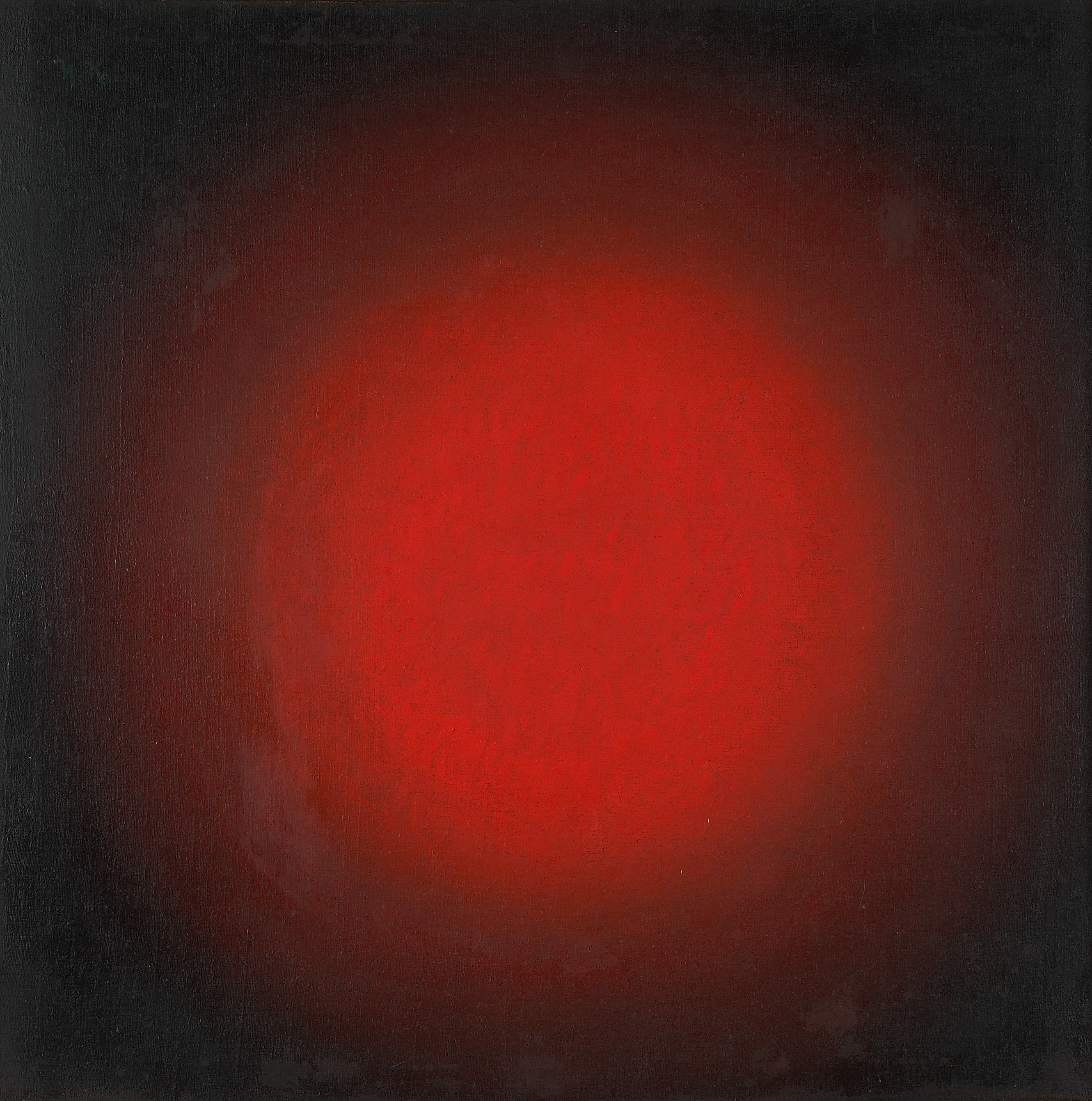
Reconciliation
“History, having as its subject the eternal discords, separated into an individual science; but as long as it speaks of man as the creator of discord, as long as it looks at the life of human race as it is now, only as a fact, not asking the question of what it must be, i.e. a project of future life, humanity will discover either in astronomy, or in cosmic art, or in world regulation, its common purpose”
Nikolai Fedorov
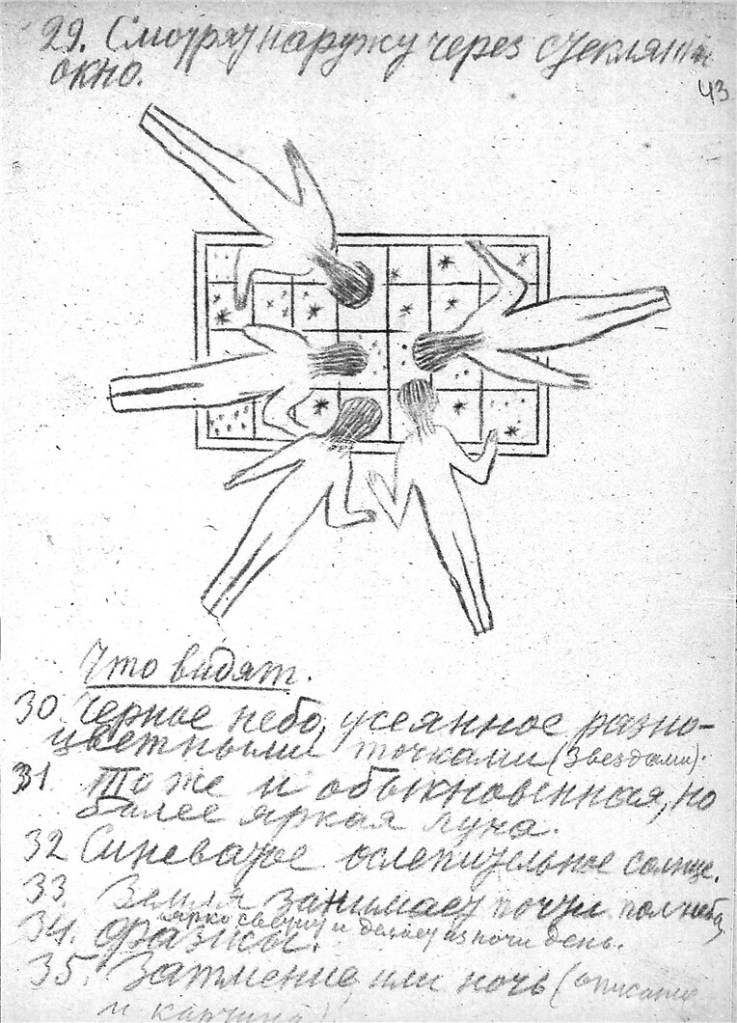
Konstantin Tsiolkovsky was a Russian physicist and philosopher best known for mathematically formulating the fundamentals of modern astronautics. Self-taught with guidance from Nikolai Fedorov, Tsiolkovsky’s life produced thousands of works of cosmic philosophy. The image from Tsiolkovsky visually depicts sentiments shared by the artist and Fedorov, expressed by Fedorov through writing such as, “The sickness of the age consists exactly in the renunciation of a common purpose for all generations…When there was no discord between capabilities, there was no separation between religion, science, and art…There was no separation between the spheres of knowledge and action” –Fedorov. Do you sense a search for a common purpose in Tsiolkovsky’s drawing?
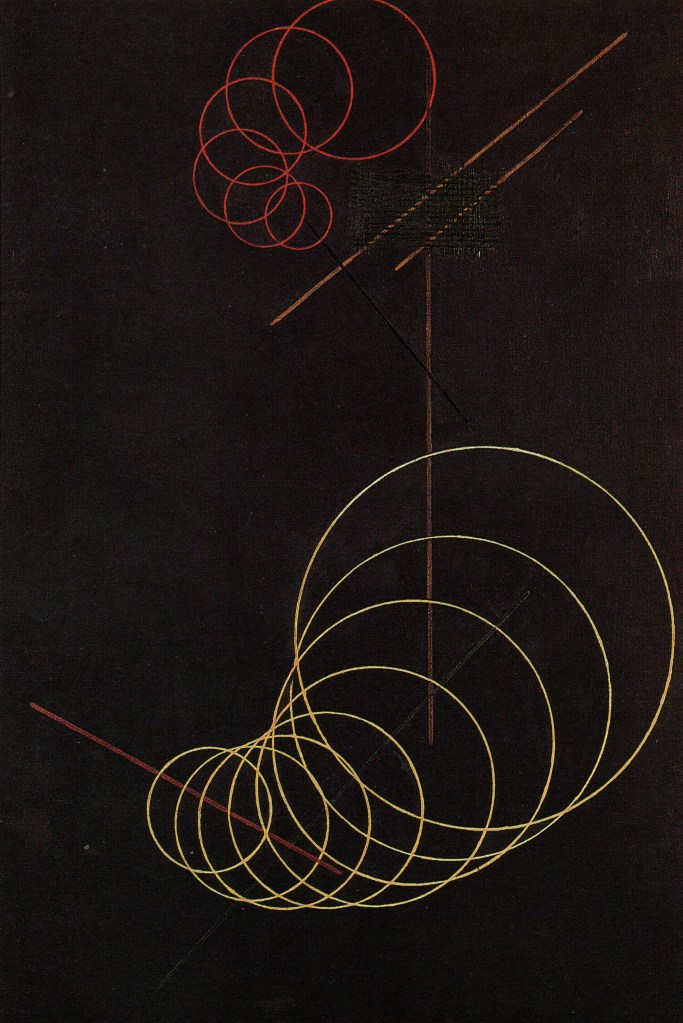
Alexander Rodchenko was of the most versatile constructivist and productivist artists of his time. “Linerarism” can be interpreted as encompassing the scientific discoveries in the fields of biology and molecular science which began to view and perceive life on a microscopic level. These shifts in perception were inserted and manifested in Soviet Museology. Fedorov writes, “In other words, in a museum, all these three functions are united: investigation, teaching, and acting, and thus those defects that originate from their separateness, which are completely unnatural, are annihilated”. The museum was to be the unifying site where the advancements of technology would find direct application to the betterment and reconciliation of peoples. Fedorov argued against the separation of disciplines such as the sciences and arts. It was the museum where isolated disciplines would be united in hopes of developing a common purpose for mankind.
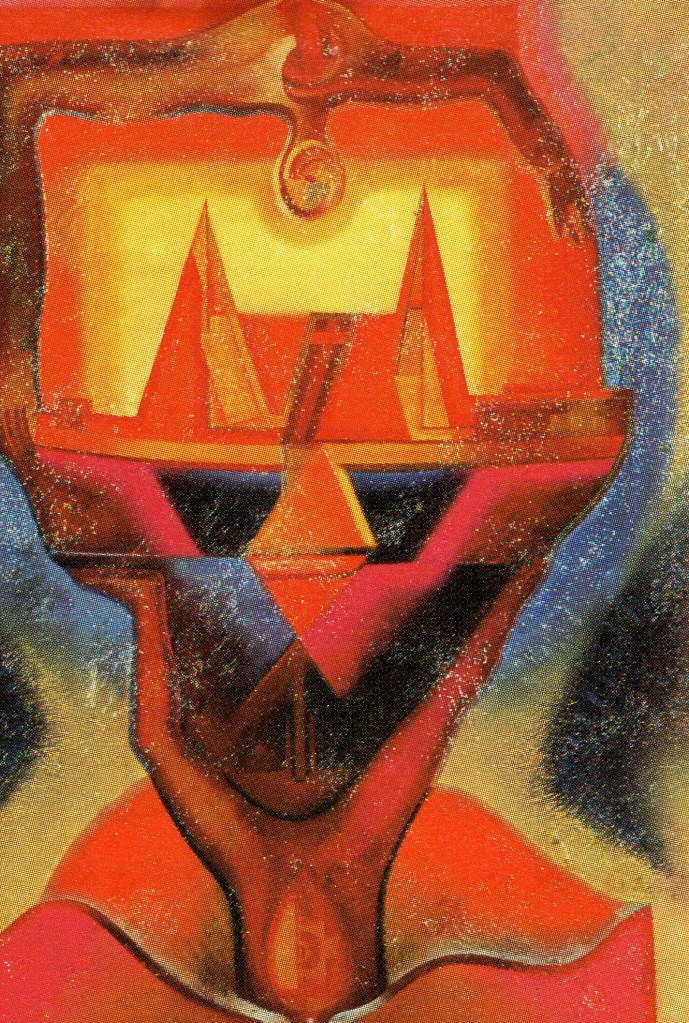
Central to soviet museum aesthetics is the idea of exhibitions as a vessel to cultivate a common task, to foster an indebtedness to those who contributed their lives so that we can stand. The Soviet museological theme of reconciliation addresses those who have been neglected, victims of wrongful deaths, murders, can be resurrected in an exhibition so as to pay our debts to them, to attempt to reconcile, even if it is an insurmountable task. One way to conceive of indebtedness through a modern lens is through organ transplantation. While we cannot resurrect the dead, we have found a way for the dead to revive dying peoples. Do you sense a reviving force in Redko’s “Mechanical Man“?
 Soviet Museum Aesthetics