Cosmism – a set of ideas born among a circle of people including the philosopher Nikolai Fedorov, who believed that the human race exists with the single objective of resurrecting all the generations of its ancestors and populating the universe with them. In the context of this system of ideas, humans are viewed not as passive but rather active and creative beings guided by the ideology of unity between humanity and the cosmos and the goal of uniting all the inhabitants of Earth, present and past.
Sergej Timofejev
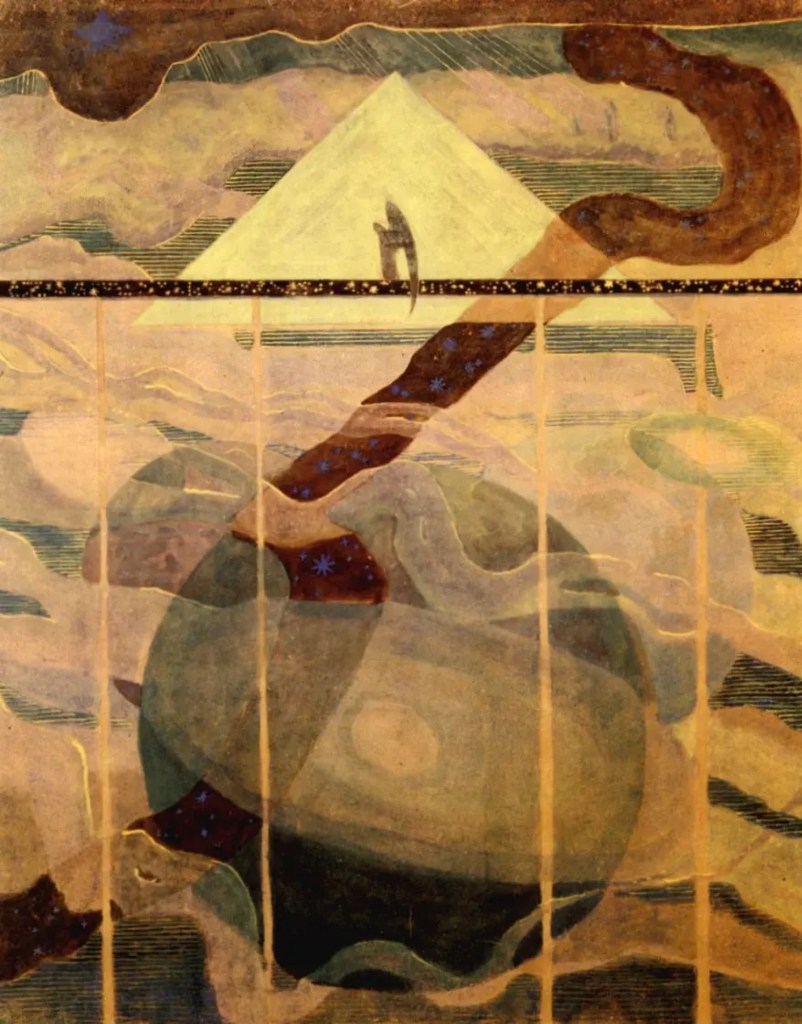
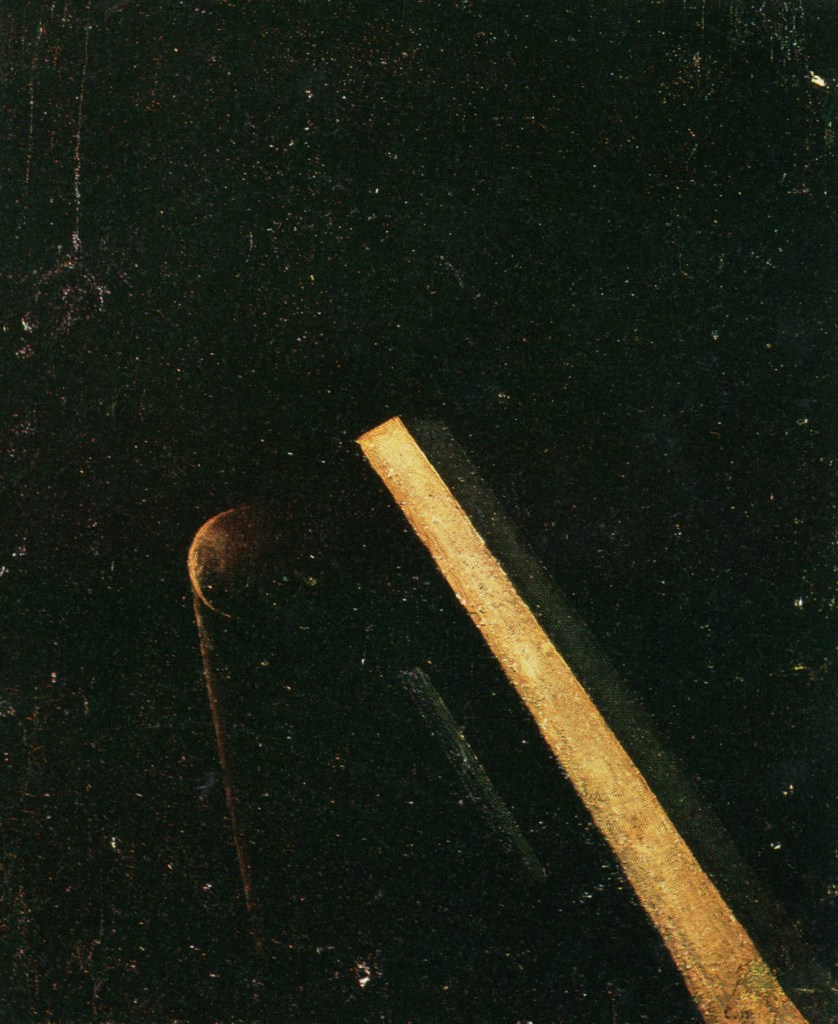
“Sonata of the stars”. Mikalojus Konstantinas Čiurlionis. (Lithuanian. 1875-1911). 1908. Painting. 73×62cm. National Art Museum of M. K. čiurlionis, Kaunas.
“Sonata of the stars” invokes Symbolism, an artistic and poetic movement or style using symbolic images and indirect suggestion to express mystical ideas, emotions, and states of mind. Čiurlionis’ painting depicts cosmic wonder. Symbolism had a close relationship with Soviet Museology as many of the fantastical ideas of Fedorov’s, such as the idea that the museum could produce literal human resurrection, functionally find value as guiding principles rather than principles to be fulfilled literally.
“Spherical Composition”. Ivan Kliun. (Russian. 1873-1943.). 1923. Oil on canvas 64.1×64.4cm. Former Costakis Collection.
“Above the Stars, From Zaratustra cycle. ”. Pyotr Fateev. (Russian. 1891-1971). 1915.
“Construction of Three Forms: Unovis”. Sergei Senkin. (Russian. 1894-1963). 1919. Oil on plywood. 49.8x41cm. MOMus.
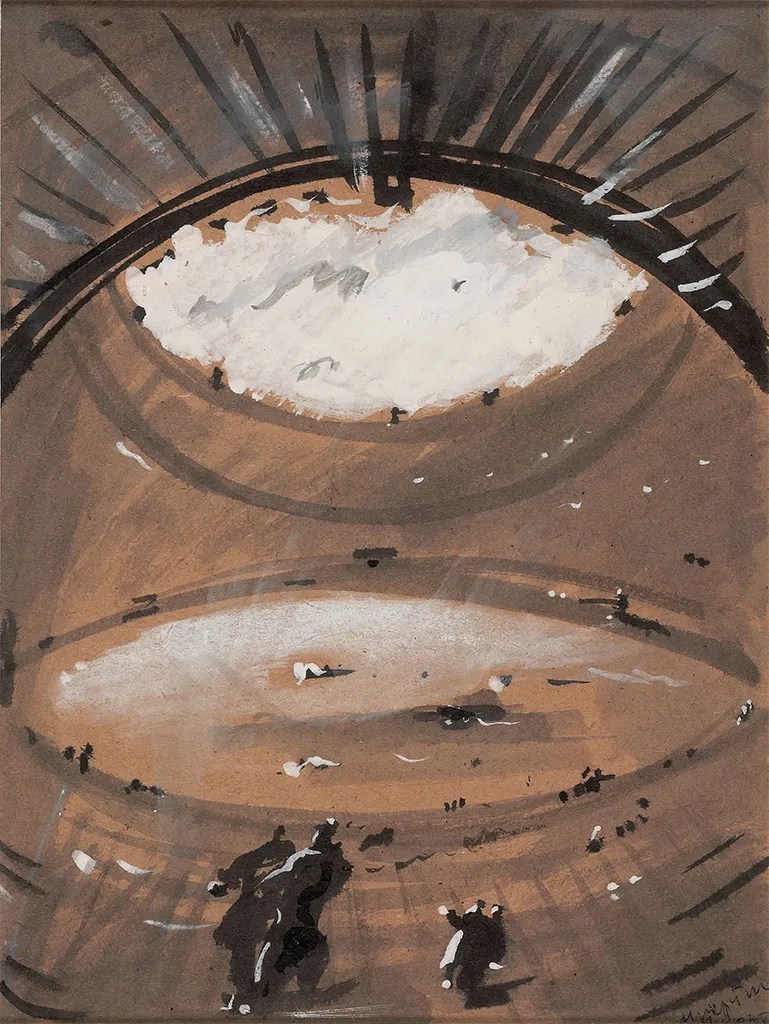
“Oval Composition, Interior“. Solomon Nikritin. (Ukranian. 1898-1965). 1920s. Ink, gouache, and watercolor on paper. 10 3/8 × 7 7/8″.
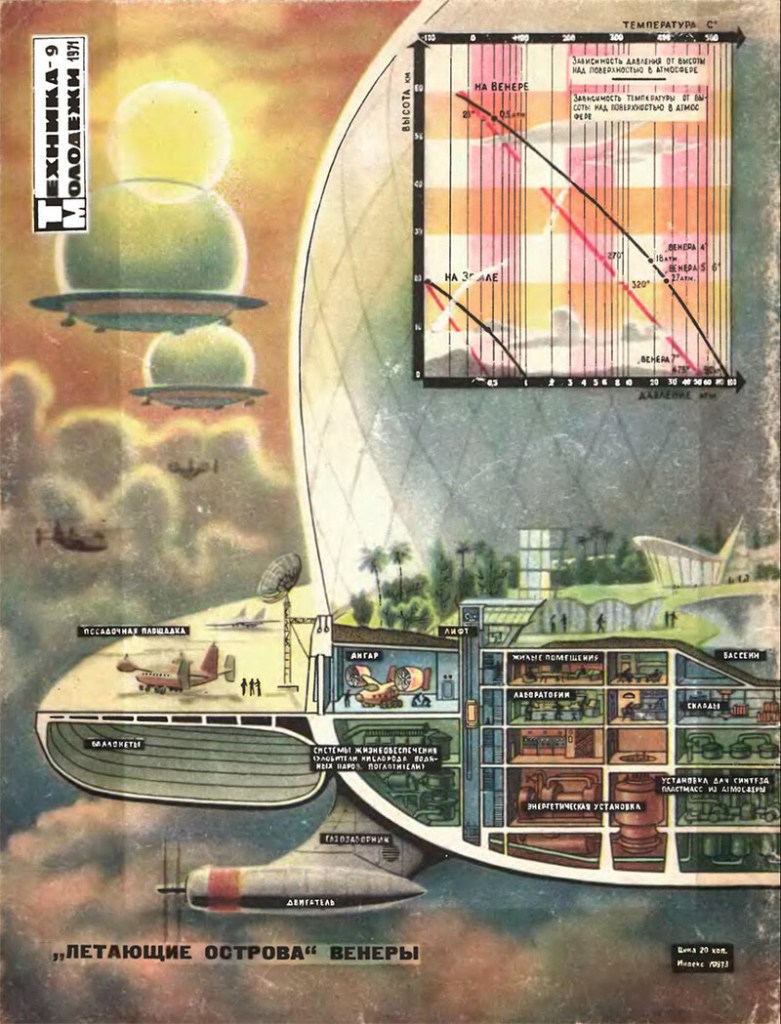
“Tekhnika-Molodezhi”. 1971.
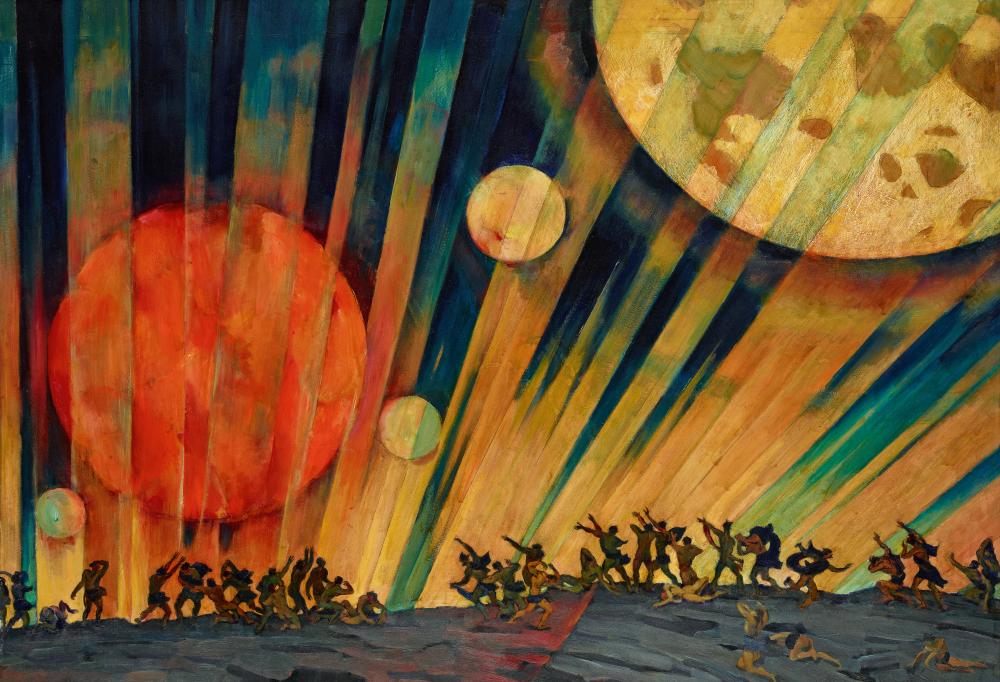
“New Planet“. Konstantin Yuon. (Russian. 1875-1958). 1921. State Tretyakov Gallery.
 Soviet Museum Aesthetics